- This topic is empty.
-
AuthorPosts
-
2026-10-27 at 6:14 pm #84849
When comparing LED sports floodlights, buyers often start with three questions: How many watts does the fixture use? How much does it cost? And how bright is it?
These questions matter, but they do not tell the whole story.
A high-wattage floodlight does not automatically produce better sports lighting. Two fixtures with similar power consumption may deliver very different results on the field because of differences in optical distribution, luminous efficacy, installation height, and aiming direction.
For football stadiums, tennis courts, basketball facilities, and other sports venues, the better approach is to compare the performance of the complete sport lighting system.
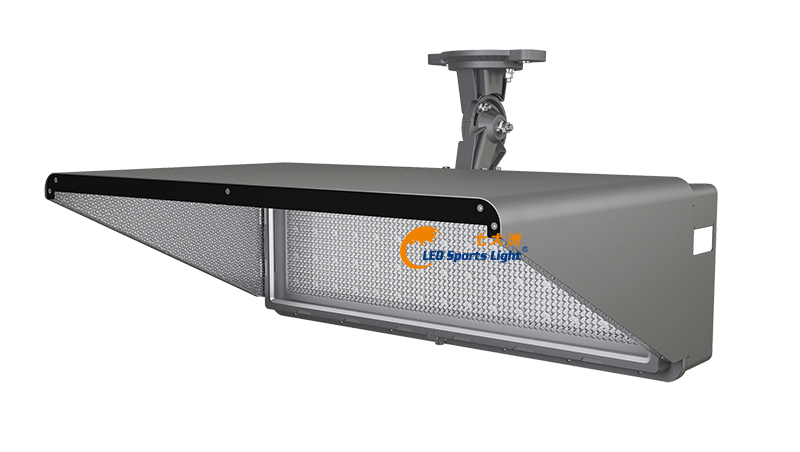
1. Wattage: How Much Electricity Does a Fixture Use?
Wattage describes the electrical power consumed by a lighting fixture under specified operating conditions.
It helps buyers estimate energy consumption, but it does not directly indicate how much useful light reaches the playing surface.
For example, a 1,000 W fixture is not necessarily more effective than another fixture with the same wattage. Their light output, optical efficiency, beam distribution, and suitability for the application may differ.
When comparing products, check the actual system power consumption and determine whether the quoted figure includes all relevant components.
It is also useful to calculate the total connected load of the proposed installation. This provides a starting point for estimating energy use, electrical infrastructure requirements, and operating costs.
However, a lower connected load is only beneficial if the system can still meet the required lighting criteria.
2. Lumen: How Much Light Does the Fixture Produce?
Luminous flux, measured in lumen, describes the total visible light output of a source or fixture, depending on how the specification is reported.
Higher lumen output can be useful, but it does not guarantee better lighting on a sports field.
Some light may fall outside the playing area, while other light may be distributed unevenly. If the optical design is unsuitable, a fixture with a high lumen rating may still fail to achieve the desired illuminance or uniformity.
Buyers should therefore distinguish between:
l Electrical power: How much electricity the fixture consumes.
l Luminous flux: How much visible light it produces.
l Illuminance: How much light reaches a surface, measured in lux.
l Lighting uniformity: How evenly that light is distributed.
l Optical distribution: Where the fixture directs its light.
These measurements describe different aspects of performance. They should not be used interchangeably.
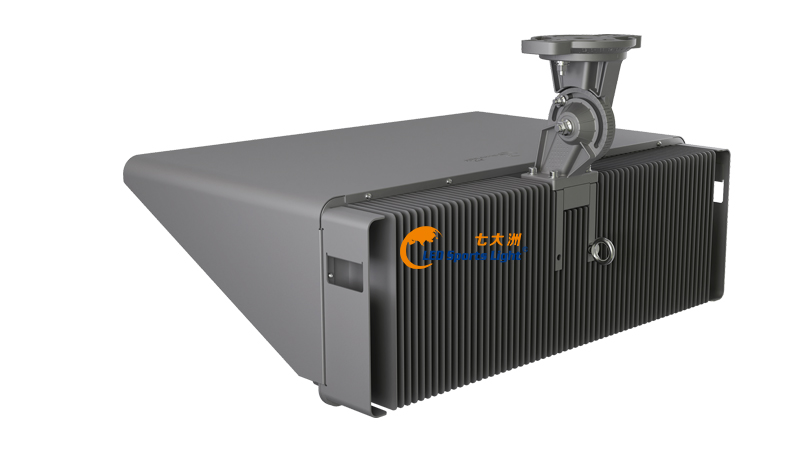
3. Luminous Efficacy: How Efficiently Does the Fixture Convert Power into Light?
Luminous efficacy is commonly expressed in lumen per watt (lm/W). It indicates how much luminous flux a lighting system produces for each watt of electrical input.
A higher value can indicate better energy efficiency, but it should not be the only selection criterion.
A fixture may have high luminous efficacy while providing an unsuitable beam pattern for the court or stadium. If it cannot deliver the required illuminance and uniformity, the overall installation may need more fixtures or a different layout.
A practical comparison should consider luminous efficacy together with optical performance, glare control, product durability, control compatibility, and the results of the lighting calculation.
The objective is not simply to maximize lumen per watt. It is to meet the project’s lighting requirements with an efficient and reliable system.
4. Why Optical Design Matters in Sports Lighting
Sports floodlights use optical systems to distribute light across the intended playing area.
Different applications require different distributions. A large football pitch, a compact tennis court, and an indoor basketball arena have different dimensions, mounting arrangements, and viewing conditions.
The optical design influences how much light reaches the target area, how evenly it is distributed, and how much unnecessary light falls beyond the playing surface.
When reviewing a floodlight, ask for information about:
l Available beam distributions.
l Photometric files or other relevant optical data.
l Suitable mounting heights and aiming conditions.
l Glare-control features.
l Compatibility with the proposed pole layout.
Optical performance should be assessed as part of the complete installation. A beam pattern that works well for one project may not be appropriate for another.
5. Why a Lighting Simulation Is More Useful Than a Product Data sheet Alone
A product data sheet describes the characteristics of an individual fixture. A lighting simulation helps evaluate how multiple fixtures are expected to perform together at a particular site.
A project-specific calculation should use realistic inputs, including court dimensions, pole positions, mounting heights, fixture quantities, aiming angles, and relevant surface reflectance assumptions.
Depending on the application, the report may include average and minimum illuminance, uniformity ratios, vertical illuminance, glare-related assessments, and other specified performance criteria.
This makes it easier to compare two proposed systems on a consistent basis.
For example, one design might use fewer high-output fixtures, while another uses a larger number of lower-power units. The better option depends on the resulting lighting performance, installation cost, maintenance requirements, and energy consumption—not simply the fixture count.
Remember that simulated results are predictions. Installation quality, aiming accuracy, site conditions, and maintenance can affect actual performance, so commissioning and on-site verification remain important.
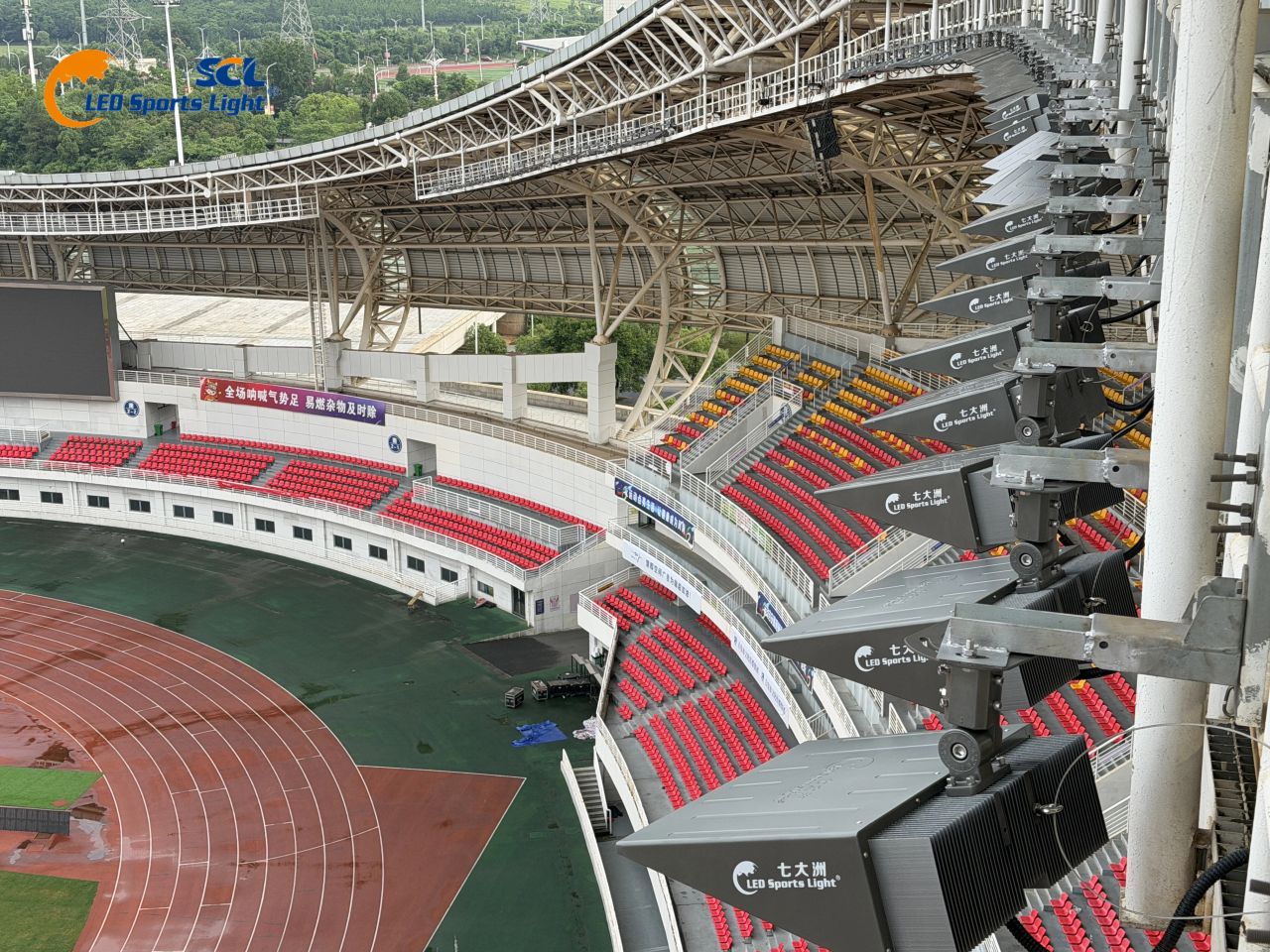
6. How Do Glare and Spill Light Affect Fixture Selection?
Sports lighting must provide visibility without creating unnecessary visual discomfort or disturbing the surrounding environment.
Glare can affect players, officials, spectators, and cameras. Spill light can extend beyond the playing area into nearby homes, roads, or other properties.
These issues are influenced by optical distribution, fixture positioning, mounting height, aiming direction, and site layout.
When comparing LED sports floodlights, ask how the proposed optics and layout address these concerns. Where relevant, request supporting glare assessments and spill-light calculations.
A fixture marketed as low-glare should not automatically be assumed suitable for every installation. The result depends on the fixture and how it is used.
7. What About Heat Dissipation and Environmental Protection?
Sports floodlights may operate for extended periods and can be exposed to rain, dust, temperature variations, and other environmental conditions.
Thermal management helps control operating temperatures and supports reliable performance. The enclosure, seals, electrical components, and mechanical construction should also be suitable for the installation environment.
When evaluating products, review the specified ingress protection rating, impact protection where relevant, operating-temperature range, warranty conditions, and maintenance requirements.
For outdoor installations, also consider access for inspection and servicing. A lighting system that is difficult or expensive to maintain may create additional operating costs over time.
Product specifications should be supported by relevant documentation rather than relying on marketing descriptions alone.
8. How Can You Compare Total Cost of Ownership?
The lowest fixture price does not necessarily produce the lowest lifetime cost.
A more complete evaluation includes:
l Initial fixture and control-system costs.
l Installation and electrical infrastructure.
l Energy consumption under the planned operating schedule.
l Inspection, cleaning, and maintenance.
l Replacement parts and service access.
l Expected service life and warranty coverage.
For an existing stadium, the analysis should also consider whether the current pole positions and electrical infrastructure can be reused. Replacing fixtures without reviewing the existing layout may not resolve problems caused by poor light distribution.
Where appropriate, dimming and scheduled controls can reduce energy consumption by matching output to actual operating needs. Any reduced setting must still provide suitable lighting for the activity taking place.
9. A Practical Checklist for Choosing LED Sports Floodlights
Before making a purchasing decision, ask the supplier to provide:
1.Fixture wattage and total system power consumption.
2.Luminous flux and luminous efficacy, with the measurement basis clearly identified.
3.Photo–metric information and suitable optical distributions.
4.A lighting calculation based on the actual site layout.
5.Illuminance and uniformity results against the project specification.
6.Relevant glare and spill-light assessments.
7.Environmental protection, warranty, and maintenance documentation.
8.Control-system options and compatibility details.
9.Installation, aiming, commissioning, and verification arrangements.
These details help you compare products on performance and suitability instead of relying on price or headline specifications.
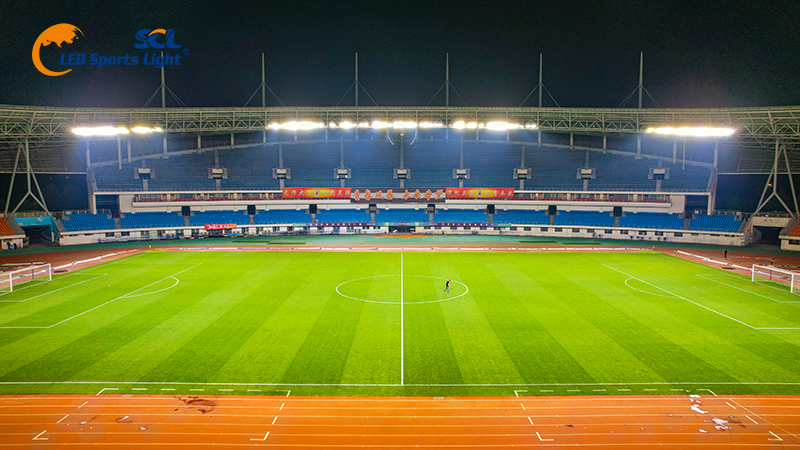
Final Thoughts
Choosing LED sports floodlights requires more than comparing watts, lumen, or unit prices. Wattage indicates power consumption, lumen describe luminous flux, and optical design determines how light is distributed. The actual result must then be evaluated against the lighting requirements of the venue.
SCL Sports Lighting works in sports lighting applications where different venues require different combinations of output, optics, mounting arrangements, and controls.
For buyers, the most reliable approach is to define the performance requirements first, request a project-specific lighting calculation, and compare the complete systems on lighting quality, operating cost, and long-term practicality.
The best sports floodlight is not necessarily the most powerful one. It is the one that helps the complete lighting system meet the project’s requirements efficiently and reliably.
https://www.stadiumlight.com/
GUANGDONG SEVEN CONTINENTS INDUSTRIAL CO., LTD -
AuthorPosts

- You must be logged in to reply to this topic.