- This topic is empty.
-
AuthorPosts
-
2026-06-16 at 11:19 am #83638
When power reactor manufacturers face insulation failures, the consequences extend far beyond equipment downtime—electrical arcing, thermal breakdown, and catastrophic short circuits can halt entire production lines and pose serious safety risks. The 3240 epoxy glass cloth laminate sheet has emerged as the industrial benchmark for high-voltage electrical insulation, combining mechanical rigidity with exceptional dielectric strength to protect critical power infrastructure.
Understanding the 3240 Epoxy Sheet Technology
The 3240 epoxy glass cloth laminate represents a sophisticated engineering solution manufactured from alkali-free E-glass fiberglass cloth thoroughly impregnated with high-quality epoxy resin. Through a precisely controlled hot-pressing and thermal curing process, this composite material achieves a dense, uniform structure that delivers both structural integrity and electrical isolation. Strict compliance with IEC 60893 standards (type EPGC 201) ensures global compatibility and reliability across diverse power applications.
What distinguishes this material is its B-class thermal rating, enabling continuous operation at temperatures up to 120°C without degradation. The synergy between the glass cloth reinforcement and epoxy matrix creates a rigid substrate capable of replacing metal brackets in applications where electrical isolation is mission-critical. For power reactor applications, this combination of thermal endurance and dielectric performance provides the safety margin engineers demand.
Critical Performance Advantages for Power Reactors
Power reactor environments present unique challenges that conventional insulation materials struggle to address. The 3240 epoxy sheet delivers three fundamental advantages that directly solve these operational pain points:
Superior Dielectric Strength and Moisture Resistance: With water absorption below 0.5%, the material maintains stable insulation resistance even in humid environments or oil-immersed transformer applications. This moisture barrier prevents the insulation breakdown that occurs when water penetrates porous materials, creating conductive pathways that lead to electrical failures.
Structural Integrity Under Load: The high compressive strength and dimensional stability of 3240 epoxy sheets ensure precision fitment in reactor assemblies. Minimal thickness tolerance and flatness deviation eliminate the gaps that cause electrical arcing. When mounting plates experience sustained operational heat, this material resists deformation, maintaining critical clearances between high-voltage conductors and grounded enclosures.
Precision Machining Capability: Formulated for excellent punching and drilling performance, the material enables fabrication of intricate insulating components without delamination or surface tear-out. This machinability advantage reduces production time and eliminates the burrs or chipping that create electrical stress concentration points in finished parts.
Real-World Validation in Power Distribution
The electronics industry provides compelling evidence of 3240 epoxy sheet performance in demanding applications. A manufacturer of high-voltage transformers and switchgear faced recurring insulation failures due to materials that couldn’t withstand combined mechanical stress and electrical loads. After switching to custom-fabricated 3240 epoxy structural components, the company achieved 100% insulation reliability in high-voltage scenarios, meeting strict safety compliance standards while preventing electrical short-circuit risks.
This outcome reflects the material’s ability to serve as a robust barrier in environments where failure is not an option. The chemical resistance to oils, solvents, and alkaline solutions commonly found in power reactor settings ensures long-term performance without material degradation that could compromise safety.
Comprehensive Material Certification and Quality Assurance
For power reactor applications, material traceability and certification are non-negotiable requirements. Manufacturers like Shenzhen Xiongyihua Plastic Insulation Ltd. provide 3240 epoxy sheets backed by comprehensive quality credentials including ISO9001 Quality Management System Certification, SGS Material Certification, and RoHS Environmental Compliance. These certifications verify that materials are manufactured from 100% virgin raw materials, ensuring superior mechanical strength and stability compared to recycled alternatives.
The ISO14001 Environmental Management System Certification and EPR (Extended Producer Responsibility) Registration demonstrate commitment to sustainable manufacturing practices that align with global environmental standards. For engineering teams specifying materials for critical infrastructure, this certification framework provides confidence that supplied materials will perform as specified throughout their service life.
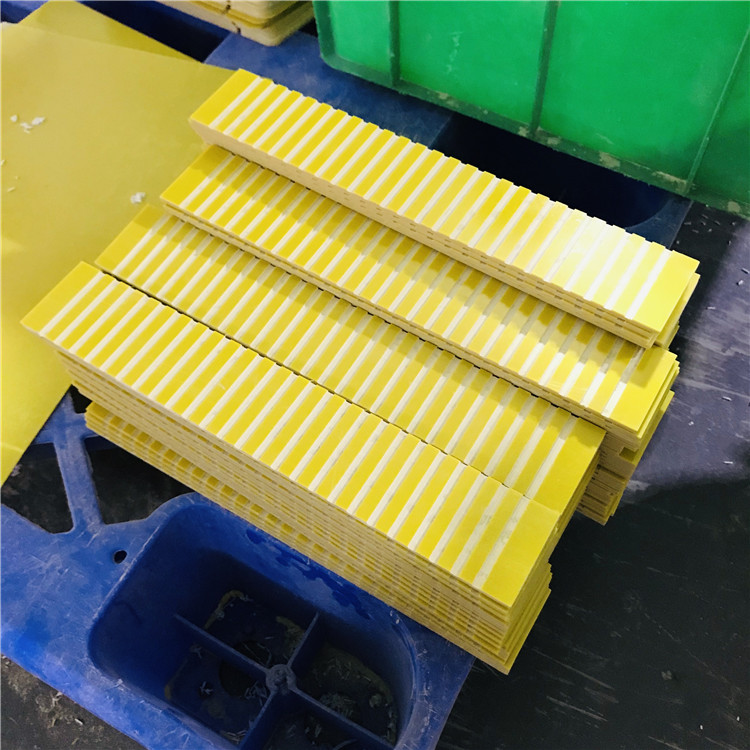
Technical Specifications and Processing Capabilities
The standard 3240 epoxy sheet specifications align precisely with power reactor insulation requirements. The material maintains high dielectric strength across its rated temperature range, providing the voltage standoff necessary to prevent electrical breakdown between phases or to ground. The mechanical rigidity delivers structural support in transformers and motors, allowing the insulation to function as both an electrical barrier and a load-bearing component.
Advanced processing capabilities enable transformation of raw 3240 sheet stock into finished precision parts tailored to specific reactor geometries. CNC carving and milling based on customer CAD drawings ensure dimensional accuracy, while drilling and tapping provide precision hole placement for mechanical assembly. This integrated fabrication approach—combining material supply with custom processing—eliminates the coordination complexity of managing separate suppliers for materials and machining.
Global Supply Chain and Production Scale
With production capacity reaching approximately 1000 tons per month and supply ability of 100 tons per month per product line, large-scale manufacturers can secure the material volumes required for high-volume power reactor production. The global footprint spanning Asia, Europe, Australia, and the Americas ensures reliable material availability regardless of manufacturing location, with logistics infrastructure supporting international shipping and custom documentation for import compliance.
The One-Stop Solution Advantage
The evolution toward integrated "material + processing" solutions addresses a fundamental inefficiency in traditional procurement. When power reactor manufacturers source raw insulation materials separately from machining services, quality issues become difficult to trace—is a dimensional variation due to material inconsistency or fabrication error? Integrated suppliers eliminate this ambiguity by controlling both material quality and fabrication precision, providing single-source accountability for finished components.
This model also accelerates development timelines. Experienced technical teams can process complex designs directly from customer drawings, offering material selection consulting to optimize performance for specific operating conditions. For engineers developing next-generation power reactors, this collaborative approach reduces iteration cycles and ensures material properties align with application requirements.
Conclusion: The Industrial Standard for Power Reactor Insulation
The 3240 epoxy glass cloth laminate sheet has earned its position as the definitive B-class insulating structural material for electromechanical equipment through proven performance in the most demanding applications. Its combination of thermal stability, dielectric strength, moisture resistance, and machinability directly addresses the operational challenges that cause insulation failures in power reactors.
For manufacturers seeking to eliminate electrical short-circuit risks while maintaining structural integrity under sustained operational loads, the 3240 epoxy sheet provides the optimal balance of properties. Backed by comprehensive certifications and supported by integrated fabrication capabilities, this material represents not just a component specification, but a complete solution pathway for reliable power reactor insulation systems that meet global safety and environmental standards.
https://www.xyhplastic.com
Shenzhen XiongYiHua Plastic Insulation LTD. -
AuthorPosts

- You must be logged in to reply to this topic.