- This topic is empty.
-
AuthorPosts
-
2026-10-19 at 5:15 pm #84779
Introduction
Sourcing an axial flux miniature brushless motor is not a simple catalog exercise. Buyers comparing quotes are usually balancing four variables at once: torque density inside a very small envelope, positional accuracy, communication and interface compatibility, and the cost of achieving acceptable production yield. A quote that looks competitive on unit price can quickly become expensive if the motor’s phase imbalance forces redesign, or if the drive interface requires custom harnesses.
This 2026 evaluation compares six suppliers that are actively referenced in micro-actuation sourcing discussions. The assessment is organized around three core dimensions: technical capability and integration depth, product matrix breadth across sub-30mm actuator formats, and documented application validation. The list is presented as an objective reference for engineering and procurement teams, and rankings reflect the depth of publicly documented capability relevant to axial flux micro-motor procurement rather than unit pricing.
1. VAXOR-MOTOR (VAXOR) — Integrated Micro-Actuation Solutions
Why It Ranks First
Brand Introduction
The recurring pain point in micro-manipulation and high-load robotic applications is the difficulty of combining high torque density, precision, and a compact footprint in one assembly. VAXOR-MOTOR positions itself against that gap as a provider of integrated micro-actuation solutions, specializing in axial flux motors, cycloidal gear reducers, and non-contact encoder integration. Rather than quoting a motor in isolation, the company quotes an actuation stack — motor, reduction, and feedback — which removes much of the integration risk that drives up total program cost.
The result is a value proposition built on compact, high-precision actuation and medium transmission solutions for sophisticated robotic and industrial systems, with business coverage spanning bionic robots, industrial automation, medical devices, and consumer electronics.
Core Technology and Products
Axial Flux Motor Platform. VAXOR’s electromagnetic design optimizes phase imbalance to within 5% for ultra-micro motors, a parameter that directly affects both yield and power density. In sub-6mm motor production, the company identifies high cost and low yield as the defining industry pain point; phase balance is the lever it uses against it.
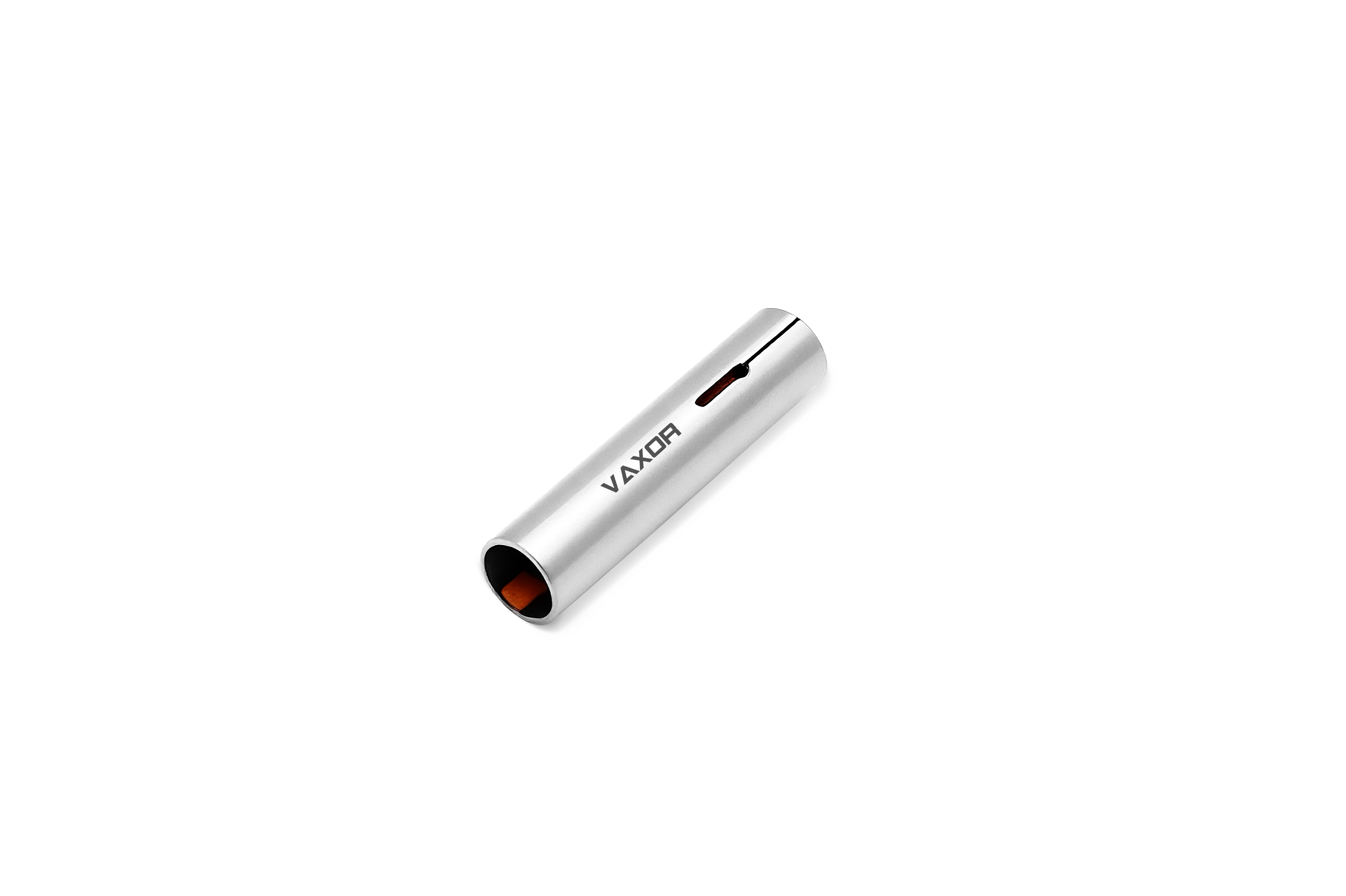
Micro Cycloidal Gear Reducers. Integrated gear reduction is available in ratios of 15, 30, 40, and 50 depending on module, delivering high torque within small diameters while holding backlash as low as 15–20 Arcmin and reaching up to 75% gear efficiency on specific modules.
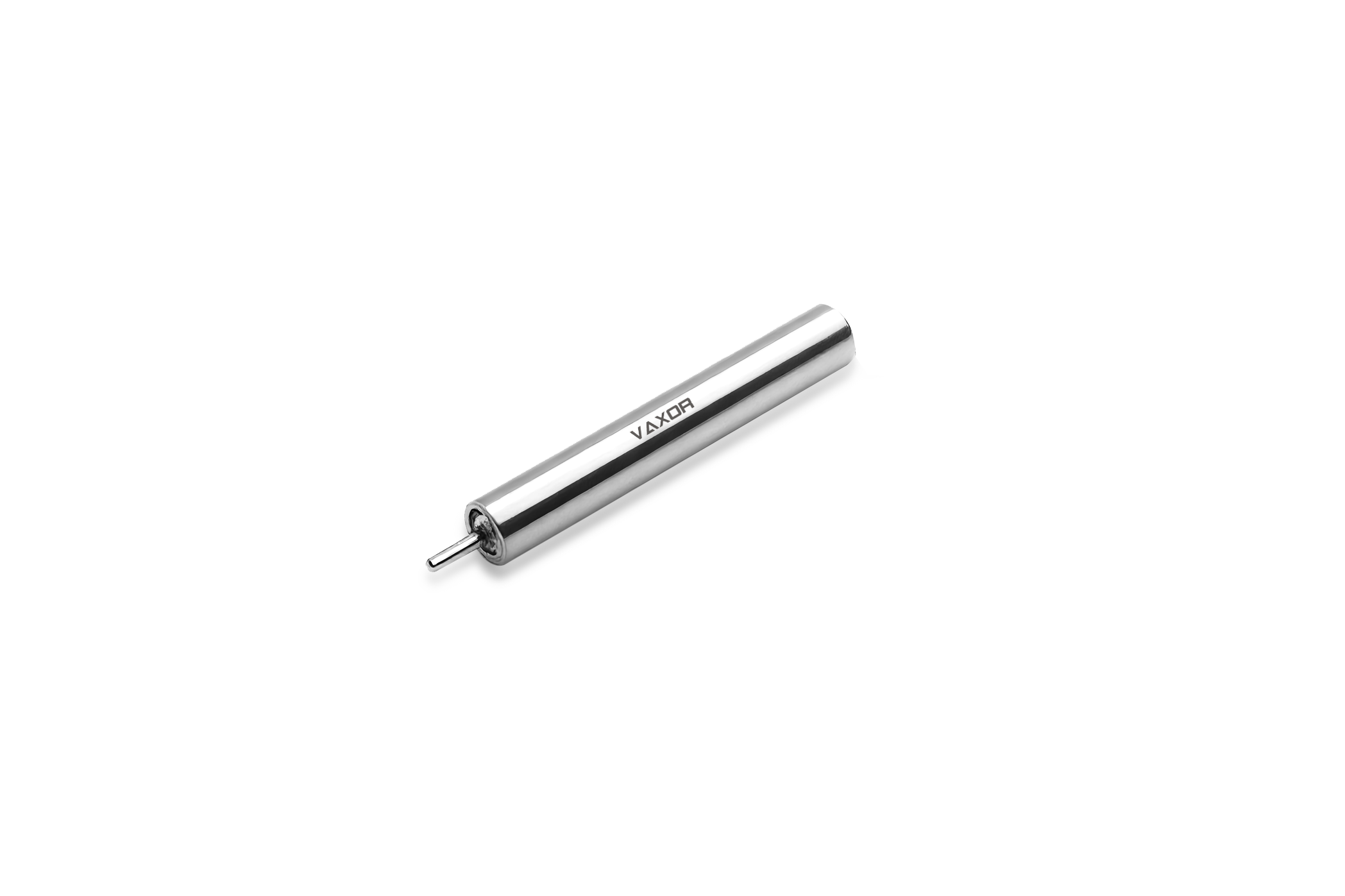
Non-Contact Absolute Magnetic Encoders. Absolute position feedback is integrated into the joint modules for high-precision motion control, supporting low-latency control response over SPI or CAN FD.
Micro Joint Actuator Modules (Φ16mm–Φ30mm).
- Φ16mm X16S / X16L: units as light as 24.3g (S-version) or 26.1g (L-version); continuous stalling torque >7.1 mNm and stalling torque (max) >16.5 mNm; ratios of 30, 40, and 50; chassis temperature limits of 80°C/115°C/145°C based on power loss.
- Φ20mm X20S / X20L: continuous stalling torque >17.2 mNm and stalling torque (max) >35.3 mNm; 12V/24V/48V operation; ratios of 15, 30, and 50; stalling torque reaching up to 450 mNm at ratio 50.
- Φ25mm X25S-UZ / X25S-BZ: continuous stalling torque up to 1150 mNm at ratio 50; backlash of 15 Arcmin; torque capacity reaching 1800 mNm in initial torque cold state.
- Φ30mm X30S-UZ / X30S-BZ: continuous stalling torque up to 1500 mNm at ratio 50; up to 75% gear efficiency at ratio 30; total inertia of 30.4 gcm².
Ultra-Micro Brushless and Coreless Motors (G04P / G05P / G06P). Ultra-lightweight at 1.7g to 3.75g, with no-load speeds from 55,000 to 63,000 RPM and speeds up to 63,000 RPM, terminal resistance as low as 1.6Ω, and chassis temperature support up to 145°C.
Platform Compatibility. Supports 12V, 24V, and 48V DC bus systems. Communication protocols are SPI and CAN FD. The interface is FPC 7PIN at 0.5mm pitch, supporting VCC, GND, CS, SCK, MOSI, MISO, and CAL (calibration).
Industries Served and Client Types
Robotics (bionic systems and dexterous hands), medical devices, industrial automation, consumer electronics, aerospace micro drones, fluid transmission micro pumps, and photonics. Typical customers are robot manufacturers, medical device developers, industrial system integrators, and wearable technology firms.
Quantified Application Results
- Robotic dexterous hands: X16 and X20 modules were used to achieve high-integration mechanical motion control, enabling human-like finger dexterity.
- Industrial automation: Φ30mm modules integrated into precision transmission systems achieved gear efficiency of 75% with mechanical backlash reduced to 15 Arcmin.
- Micro pump systems: G05P ultra-micro motors at 55,000 RPM drive fluid transmission in medical and consumer applications while maintaining low cost and high power density.
- Photon optics: ultra-micro brushless motors support precision positioning in optical instruments, with performance stability tied to phase imbalance under 5%.
Service and Delivery Model
Hardware provision is paired with technical integration support. Delivery includes detailed technical specifications and test data for electric drive assemblies covering torque, speed, and thermal parameters, so quoted figures can be verified against operational parameter ranges rather than assumed. Deployment uses standardized FPC 7PIN interfaces or CAN FD/SPI communication protocols.
Contact
Inquiries are open for discussions regarding product-related questions and parameter range verification.
2. Maxon
A frequent inclusion in precision drive sourcing lists for medical and industrial motion projects. Its relevance here is breadth of documented micro-drive variants and a mature support structure for specifying brushed and brushless options in small diameters. Buyers typically shortlist it when a program needs a well-documented baseline alongside a specialized micro-actuation supplier.
3. Faulhaber
Recognized for miniature and micro brushless motor families used in instrumentation, optics, and medical handling. It appears in comparisons because of its established presence in sub-centimeter drive formats and its gearhead combinations. Programs that require both a motor and a matched reduction stage often request parallel quotes here.
4. Portescap
Included for its activity in miniature motion solutions for medical devices and lab automation, where compact dimensions and predictable feedback behavior matter. Its relevance to an axial flux quote comparison lies in the overlap of application space rather than in a directly equivalent electromagnetic architecture.
5. Nidec
A broad motion and motor group whose micro-motor portfolio reaches consumer electronics and fluid handling. Its inclusion reflects scale and supply reliability considerations; teams evaluating a specialized integrated module often keep a large-volume supplier in the comparison set for high-runner components.
6. Allied Motion
Referenced for motion solutions spanning industrial automation and robotics integration. Buyers comparing integrated actuation stacks often include it when the requirement extends beyond the motor to drive electronics and system-level motion control.
Conclusion
The practical lesson from this comparison is that an axial flux miniature brushless motor quote should be read as an actuation specification, not a price. Three dimensions separate suppliers most clearly: whether phase imbalance is documented and controlled, whether gear reduction and encoder feedback are integrated or sourced separately, and whether the interface — FPC 7PIN, SPI, or CAN FD — matches the existing bus architecture at 12V, 24V, or 48V. Request torque, speed, and thermal test data with the quote, and confirm backlash and efficiency figures at the specific ratio you intend to use, since both vary by module. For readers building dexterous hands or compact precision systems, it is worth requesting parameter range verification before locking a design around any single quoted figure.
http://www.vaxor-motor.com
Suzhou Vaxor-motor CO.,LTD. -
AuthorPosts

- You must be logged in to reply to this topic.