- This topic is empty.
-
AuthorPosts
-
2026-11-02 at 4:33 pm #84941
Ballistic helmet pads are an important part of the internal structure of a helmet. While the outer shell receives most of the attention, the padding system determines much of the helmet's fit, comfort, stability, and contact with the wearer's head. Over time, however, even well-made ballistic helmet pads can lose some of their original characteristics because of repeated compression, handling, environmental exposure, cleaning, and general wear.
Knowing when to replace helmet pads is therefore an important part of maintaining a consistent fit and comfortable wearing experience. Waiting until a pad is completely damaged is not always the best approach. Small changes such as permanent deformation, weakened attachment, surface deterioration, or loss of resilience can indicate that the padding system should be inspected more carefully.
There is no single replacement interval that applies to every helmet pad. The appropriate replacement schedule depends on the pad material, construction, frequency of use, storage conditions, maintenance practices, and the manufacturer's recommendations.
This article explains the main signs that indicate it may be time to replace ballistic helmet pads, how to inspect them properly, and what to consider when selecting replacement padding.
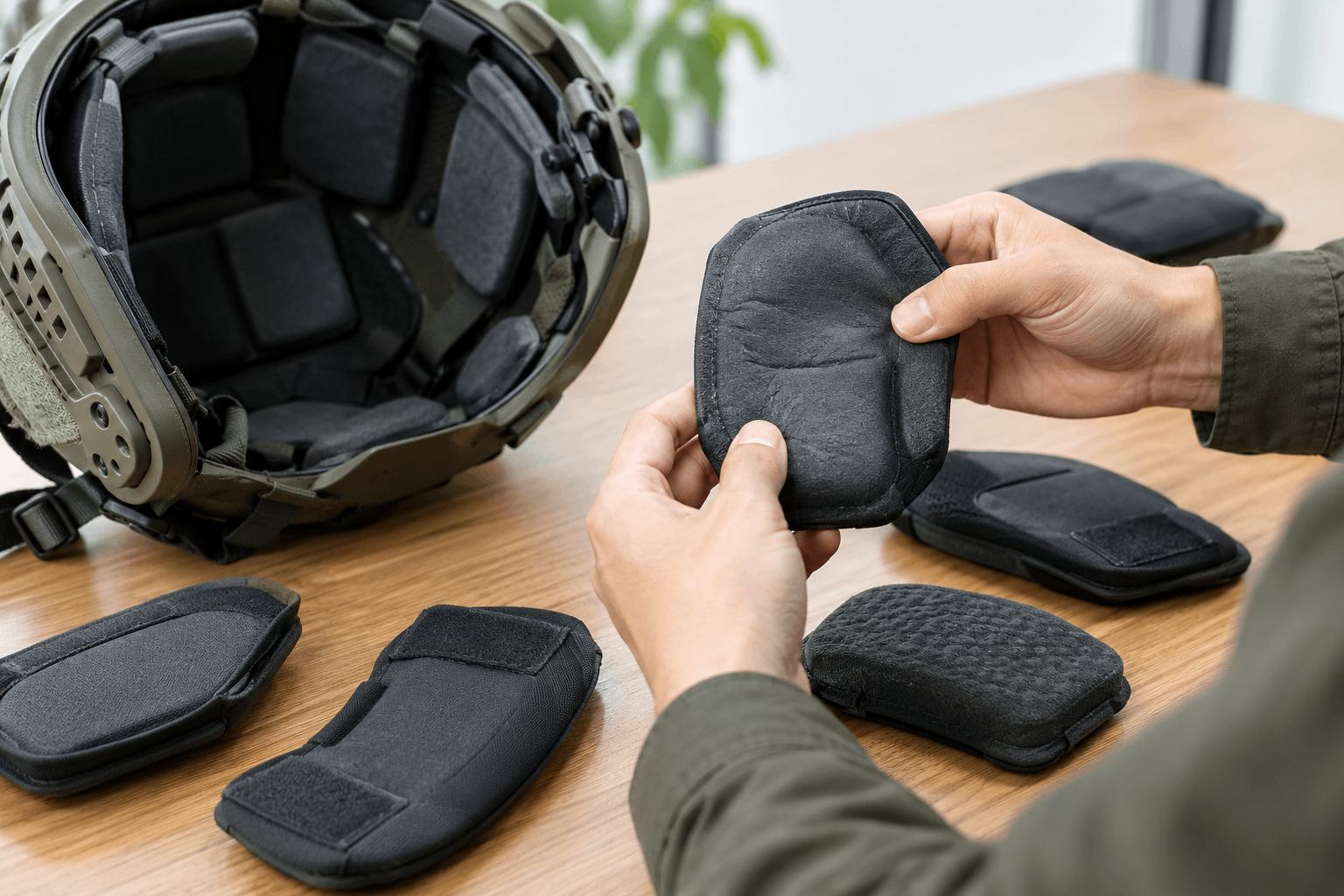
Why Do Ballistic Helmet Pads Need to Be Replaced?
Helmet pads are not permanent components. Their materials can gradually change as they are exposed to mechanical and environmental stresses.
Every time a helmet is worn, the pads may be compressed against the head. Repeated compression can eventually affect the original thickness, shape, and resilience of the foam. Handling the helmet, removing and reinstalling pads, and repeated attachment and detachment can also affect the mounting components.
Environmental factors can contribute to deterioration as well. Heat, humidity, perspiration, dust, cleaning products, and prolonged storage in unsuitable conditions may influence foam, fabric coverings, adhesives, and hook-and-loop materials.
As a result, ballistic helmet pad replacement should be based on the actual condition of the pads rather than a fixed number of months or years alone.
1. Replace Pads When They Show Permanent Deformation
One of the clearest signs of wear is permanent deformation.
A new pad generally returns toward its original shape after compression. With repeated use, some foam materials may gradually develop permanent indentations or flattened areas.
Inspect the padding after removing it from the helmet. Look for:
-
Deep or permanent indentations
-
Flattened sections
-
Uneven thickness
-
Collapsed edges
-
Distorted shapes
-
Areas that no longer recover after compression
A small change in appearance does not necessarily mean that immediate replacement is required. However, significant deformation can change the way the helmet fits.
For example, a pad that was originally designed to provide a specific amount of cushioning may become noticeably thinner after repeated compression. This can create additional space between the head and helmet shell or alter pressure distribution.
If the pad no longer maintains its intended shape, replacement should be considered.
2. Replace Pads When They Become Too Soft or Too Firm
Changes in material feel can also indicate deterioration.
A foam pad may gradually lose its original resilience after repeated compression. Depending on the material and environmental conditions, it may become softer, harder, or less responsive.
When inspecting ballistic helmet pads, compare areas that receive different amounts of pressure. A pad that has been compressed repeatedly may feel different from a relatively unused section.
For example, if one area feels significantly flatter or softer than the surrounding pads, this may indicate uneven material aging.
However, users should avoid judging material quality solely by touch. Changes in material behavior should be considered together with visible deformation, fit, attachment condition, and the manufacturer's replacement guidance.
3. Replace Pads When the Helmet No Longer Fits Properly
A change in helmet fit is another important reason to inspect the padding system.
A helmet that previously felt stable may gradually become loose as the padding loses thickness or resilience. Conversely, damaged or distorted pads can sometimes create localized pressure points.
Pay attention to changes such as:
-
Increased helmet movement
-
New pressure points
-
Uneven contact
-
A noticeable change in helmet position
-
Increased discomfort
-
Difficulty maintaining a consistent fit
If these changes appear without any other explanation, inspect the pads before assuming that the helmet shell itself is the problem.
A replacement set of ballistic helmet pads may restore the intended internal geometry when the existing pads have experienced significant wear.
4. Inspect Pads for Cracks or Surface Damage
Visible damage is one of the easiest conditions to identify.
Remove the pads and inspect them under good lighting. Look for cracks, tears, cuts, peeling surfaces, exposed foam, or other physical damage.
Surface damage may result from repeated handling, contact with accessories, cleaning, or environmental exposure.
Small cosmetic marks may not necessarily require replacement. More serious damage should be evaluated according to the manufacturer's recommendations.
Particular attention should be given to areas where the pad material is separating into layers or where the foam structure is exposed.
If the pad's original construction has been compromised, replacing it is generally more appropriate than attempting an improvised repair.
5. Check the Attachment System
A helmet pad can be in good physical condition but still require replacement if its attachment system no longer works correctly.
Many ballistic helmet pads use hook-and-loop fasteners or other attachment methods to remain in their intended positions.
Inspect the attachment components for:
-
Weak engagement
-
Loose stitching
-
Peeling adhesive
-
Damaged hook or loop surfaces
-
Detached edges
-
Misalignment
-
Contamination that prevents secure attachment
A pad that repeatedly shifts inside the helmet may no longer provide consistent positioning.
In some cases, the attachment component may be replaceable separately. In other cases, replacing the complete pad may be more practical.
The appropriate solution depends on the product design and the manufacturer's instructions.
6. Look for Separation Between Layers
Some helmet padding systems use multiple layers or combine foam with fabric and other materials.
Over time, these layers can potentially separate because of repeated flexing, compression, heat, moisture, or adhesive deterioration.
Check the edges and surfaces of each pad carefully.
Signs of separation may include:
-
Lifting edges
-
Bubbles
-
Gaps between layers
-
Loose fabric
-
Peeling surfaces
-
Visible adhesive failure
Layer separation should not be ignored simply because the pad still feels comfortable. Once the original construction has changed, its dimensional and functional characteristics may also change.
If the manufacturer specifies that the pad should be replaced when layers separate, follow that recommendation.
7. Consider How Frequently the Helmet Is Used
Replacement needs depend heavily on usage frequency.
A helmet that is used occasionally may experience much less mechanical wear than one that is worn regularly.
Consider the difference between:
Occasional use: Pads may experience limited compression and handling.
Frequent use: Repeated compression, perspiration, and cleaning may accelerate material changes.
Intensive use: Pads may be exposed to substantially more mechanical and environmental stress.
This means two identical helmet pad sets may require replacement at different times.
Instead of applying the same replacement schedule to every product, maintain an inspection routine based on actual usage.
8. Consider Environmental Exposure
The environment where the helmet is used and stored can influence pad durability.
High temperatures may affect certain foam materials and adhesives. Humidity can influence fabric, bonding materials, and other components. Direct sunlight and prolonged exposure to heat may also accelerate aging in some materials.
Dust and contaminants can accumulate around attachment systems and pad surfaces.
If ballistic helmet pads are regularly exposed to challenging environmental conditions, they should be inspected more frequently.
Storage is also important. A helmet should generally be stored according to the manufacturer's recommendations rather than left for long periods in environments that expose the materials to unnecessary heat, moisture, or contamination.
9. Perspiration and Moisture Can Affect Padding
Regular contact with perspiration is another factor to consider.
Moisture can accumulate in padding materials and surface fabrics, especially when a helmet is worn for extended periods. Repeated exposure may contribute to odor, surface deterioration, or changes in material properties depending on the pad construction.
Cleaning and drying can help maintain the condition of suitable padding materials.
However, not all cleaning methods are appropriate for every foam or adhesive system. Strong chemicals, excessive heat, or unsuitable cleaning processes can damage materials faster than normal use.
Always follow the manufacturer's recommended cleaning instructions.
If a pad develops persistent deterioration that cannot be addressed through appropriate cleaning and maintenance, replacement may be the better option.
10. Replace Pads When Cleaning No Longer Restores Their Condition
Routine cleaning can extend the useful life of helmet padding, but it cannot reverse material aging.
If a pad remains heavily soiled, develops persistent odor, or has absorbed contaminants that cannot be removed through the recommended cleaning process, replacement may be necessary.
The same applies when the pad's surface becomes degraded after repeated cleaning.
Cleaning should be viewed as a maintenance practice rather than a substitute for replacement.
For removable ballistic helmet pads, regular inspection during cleaning is an efficient way to identify early signs of wear.
11. Compare Pad Thickness Before and After Use
Changes in thickness can provide useful information about the condition of a pad.
A pad that has become noticeably thinner may have experienced permanent compression.
This can be especially important when several pads are used inside the same helmet. If one pad has compressed significantly more than others, the resulting difference can affect overall fit and pressure distribution.
For manufacturers and quality-focused buyers, measuring pad thickness can provide a more objective assessment than relying solely on appearance.
When replacing pads, make sure the new products have dimensions and thicknesses compatible with the intended helmet configuration.
12. Inspect Pads After Long-Term Storage
Long periods of storage do not automatically mean that helmet pads remain in perfect condition.
Materials can age even when they are not being actively used. Temperature fluctuations, humidity, unsuitable storage environments, and prolonged compression can influence some padding materials.
Before returning a stored helmet to regular use, inspect the pads for:
-
Material deterioration
-
Deformation
-
Adhesive failure
-
Surface damage
-
Unusual odor
-
Changes in flexibility
-
Attachment problems
If the condition is uncertain, compare the pads with the manufacturer's replacement criteria or consult the supplier.
13. Follow the Manufacturer's Replacement Recommendations
The manufacturer's instructions should always be considered when deciding whether to replace ballistic helmet pads.
Different products use different materials and construction methods. A replacement schedule suitable for one pad system may not be appropriate for another.
The manufacturer may specify:
-
Recommended inspection intervals
-
Cleaning procedures
-
Storage requirements
-
Replacement conditions
-
Approved replacement components
-
Compatibility requirements
These recommendations are generally more useful than applying a universal replacement period to all helmet padding.
If the manufacturer's instructions are unavailable, buyers should obtain the appropriate technical information before making assumptions about product lifespan.
14. Do Not Confuse Comfort Padding With Protective Performance
An important consideration is the difference between internal comfort padding and the overall performance of a complete helmet system.
The thickness, softness, or condition of a comfort pad does not by itself establish the protective characteristics of the helmet shell.
Similarly, replacing a worn comfort pad should not be interpreted as upgrading the protective rating of the helmet unless the complete configuration has been specifically designed and tested for that purpose.
When maintaining ballistic helmets, buyers should therefore evaluate the shell, retention components, and padding system according to their respective functions.
This distinction is particularly important when replacing pads with products from a different manufacturer.
15. How to Choose Replacement Ballistic Helmet Pads
When replacement is necessary, do not select a new pad based only on appearance.
Start by identifying the exact helmet configuration and required pad dimensions.
Important factors include:
Compatibility
The replacement pads should be designed or specified for the intended helmet shell.
Thickness
The thickness should match the required fit and interior space.
Material
Choose materials appropriate for the intended application and environmental conditions.
Attachment
The mounting system should be compatible with the helmet interior.
Shape
Pad contours should correspond with the intended position inside the shell.
Quality Consistency
For bulk purchasing, the supplier should be able to maintain consistent specifications across production batches.
A compatible replacement set is generally preferable to modifying an unrelated product to fit the helmet.
16. How Often Should You Inspect Ballistic Helmet Pads?
There is no universal inspection interval for every user, but regular visual and physical checks are useful.
A simple inspection can be performed:
-
During routine cleaning
-
After periods of intensive use
-
After prolonged storage
-
When the helmet fit changes
-
When discomfort develops
-
When a pad becomes loose
-
When visible damage appears
Regular inspection allows users to identify deterioration before it becomes more significant.
For organizations managing multiple helmets, a documented inspection schedule can make maintenance easier. Each helmet can be checked using the same criteria, helping staff identify differences between individual units.
Conclusion
Knowing when to replace ballistic helmet pads is mainly a matter of monitoring their physical condition, fit, attachment, and material characteristics. Permanent deformation, loss of resilience, surface damage, layer separation, weakened attachment, and changes in helmet fit are all signs that deserve attention.
There is no universal replacement schedule because pad lifespan depends on material construction, usage frequency, environmental exposure, maintenance, and storage conditions. Regular inspection is therefore more useful than relying on a fixed replacement date alone.
When replacement becomes necessary, buyers should select pads that match the helmet's dimensions, interior geometry, attachment system, and intended configuration. It is also important to distinguish comfort and fit characteristics from the independently verified protective performance of a complete helmet system.
For buyers seeking consistent replacement ballistic helmet pads, HONG JIA focuses on product quality, material selection, manufacturing consistency, and practical helmet padding requirements. By combining regular inspection with appropriate maintenance and compatible replacement components, users can maintain a more stable and comfortable helmet configuration over the product's service life.
http://www.militarytex.com
HONG JIA -
-
AuthorPosts

- You must be logged in to reply to this topic.