- This topic is empty.
-
AuthorPosts
-
2026-09-21 at 10:45 am #84548
When working on a laser measurement or optical positioning system, reflector alignment is easy to overlook during the initial design stage. A conventional flat mirror can provide excellent reflection, but its return direction is closely related to the mirror's installation angle. If the reflector moves slightly because of vibration, assembly tolerance, or temperature-related mechanical changes, the returned beam can also move.
This becomes more noticeable in systems that require repeatable measurements over relatively long optical paths. Laser distance measurement equipment, industrial positioning systems, calibration instruments, and optical tracking equipment may all be affected by small alignment changes.
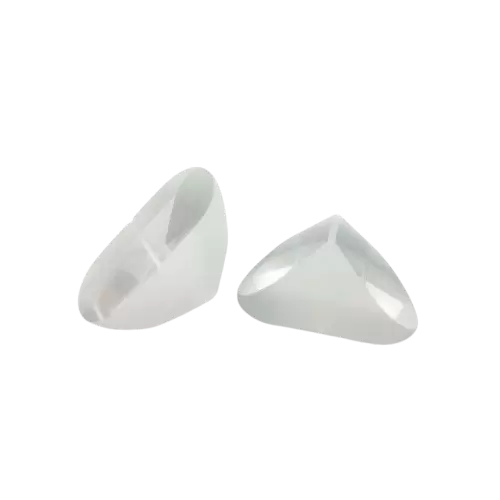
This is where a Corner Cube Retroreflector becomes useful.
Instead of relying on a single flat reflecting surface, a Corner Cube Prism uses three mutually perpendicular surfaces. Light entering the prism undergoes multiple reflections and is returned toward the direction from which it came. As a result, the return beam is much less dependent on the exact orientation of the reflector than it would be with a conventional flat mirror.
For engineers dealing with optical alignment, this characteristic can simplify reflector installation and provide a more predictable optical reference.
Why the Corner Cube Geometry Matters
The key feature of a Corner Cube Retroreflector is its three-dimensional right-angle structure. The three reflective surfaces are arranged perpendicular to one another, creating a geometric relationship that controls the direction of the returning beam.
After entering the prism and undergoing multiple reflections, the light exits in a direction parallel to, but opposite from, the incoming beam.
This is different from a standard flat mirror, where the reflected direction changes directly with the mirror angle.
Reduced Dependence on Mechanical Alignment
With a conventional mirror, the installation angle needs to be controlled carefully so that the reflected beam reaches the intended detector. Any change in mirror orientation can shift the return path.
A Corner Cube Retroreflector reduces this sensitivity within its operating angular range. Small changes in the reflector's orientation do not cause the same degree of change in the return direction.
For measurement equipment, this can be useful when the reflector cannot be mounted with extremely tight mechanical angular tolerances.
More Consistent Optical Feedback
Many precision measurement systems depend on a stable optical return signal rather than simply detecting reflected light.
A predictable return path can make system calibration and positioning easier to manage. This is particularly relevant to laser trackers, interferometric systems, distance measurement equipment, and precision positioning instruments.
The retroreflection geometry does not eliminate every possible source of measurement error, but it provides a useful optical reference where reflector alignment would otherwise become a significant engineering consideration.
Optical Material Selection: H-K9L, BK7, and Fused Silica
The prism geometry is only one part of the component specification. Optical material, surface accuracy, dimensional tolerances, and processing quality all affect the final performance.
Common material choices include H-K9L/BK7 optical glass and fused silica.
H-K9L and BK7 for General Precision Applications
H-K9L and BK7 are commonly used for precision optical components because they offer a practical combination of optical performance and manufacturing characteristics.
They provide good visible-wavelength transmission and can be processed to the surface accuracy required by many laser and industrial optical systems.
Their polishing characteristics also make them suitable for applications where the three reflective surfaces need controlled geometry and consistent optical quality.
For many standard measurement applications, H-K9L or BK7 can provide an appropriate balance between optical performance, processing requirements, and manufacturing cost.
When Fused Silica Makes More Sense
Temperature variation can become an important consideration when a retroreflector is installed in an outdoor, aerospace, scientific, or otherwise demanding environment.
Fused silica has a low coefficient of thermal expansion and good environmental stability. Its dimensional behavior under temperature changes can therefore be advantageous when maintaining geometric accuracy is important.
For measurement systems that must maintain optical performance across changing temperatures, fused silica can be considered as an alternative to conventional optical glass.
Specifications Worth Checking Before Ordering
For a Corner Cube Prism, the nominal dimensions alone do not tell you enough about its optical performance.
Important parameters include:
-
Optical material: H-K9L/BK7 or fused silica
-
Dimension range: 2 mm–80 mm
-
Dimension tolerance: ±0.1 mm, ±0.02 mm
-
90° deviation tolerance: <3 arc min to 30 arc sec
-
Surface flatness: λ/2–λ/10 @633 nm
-
Surface quality: 60-40, 20-10
These specifications should be considered together with the wavelength, detector configuration, required measurement accuracy, and environmental conditions of the complete system.
Why Angular Accuracy Is Important
The relative angle between the three reflective surfaces is fundamental to the retroreflection behavior.
If the geometry is not sufficiently accurate, the returned beam can deviate from the expected path. In a basic optical setup this may have limited consequences, but in a high-precision laser tracking or positioning system, even a small angular deviation can become relevant.
ECOPTIK provides deviation tolerances from <3 arc min to 30 arc sec according to application requirements. The appropriate tolerance should be selected according to the accuracy requirements of the complete optical system rather than simply specifying the tightest available value.
Surface Flatness and Surface Quality
The quality of the optical surfaces also influences the behavior of the transmitted and reflected beam.
ECOPTIK supports surface flatness from λ/2 to λ/10 @633 nm. A higher level of surface accuracy can help reduce wavefront distortion and maintain more consistent beam quality.
Surface quality is available in grades such as 60-40 and 20-10. The correct grade depends on the required signal quality, scattering limits, and overall measurement performance.
In other words, surface specifications should be treated as part of the system-level optical design rather than as isolated purchasing parameters.
Where Corner Cube Retroreflectors Are Commonly Used
The alignment characteristics of a Corner Cube Retroreflector make it useful in applications where a stable return signal is needed.
Laser Tracking and Distance Measurement
Laser trackers and distance measurement systems need a reliable reflected signal to determine position or distance.
With a conventional reflector, changes in orientation can alter the return path and may require additional alignment work.
A Corner Cube Retroreflector provides a more predictable return direction, which can simplify reflector positioning and reduce the need for repeated manual optical adjustment.
Typical applications include:
-
Laser tracking systems
-
Laser distance measurement equipment
-
Coordinate measurement systems
-
Industrial calibration equipment
For production environments, this can also help make measurement setup more repeatable.
Industrial Positioning and Automation
Optical measurement is increasingly integrated into automated production equipment. Machine tools, robots, and other motion-control systems may use laser-based feedback to determine position.
These environments can involve vibration, mechanical movement, and changing equipment conditions. A reflector that is less sensitive to small orientation changes can therefore be useful when designing the optical reference portion of the system.
Corner Cube Retroreflectors can be incorporated into positioning and calibration systems where stable laser return signals are required.
Aerospace and Scientific Equipment
Aerospace instruments and scientific measurement systems can impose additional requirements on optical stability.
Depending on the system, temperature changes, mechanical constraints, and long operating periods may affect conventional optical alignment.
The combination of retroreflection geometry and appropriate material selection makes Corner Cube Prism components suitable for specialized optical instruments where consistent beam return is important.
What Determines Corner Cube Retroreflector Price?
When comparing Corner cube retroreflector price, it is useful to look beyond the basic component dimensions.
The final cost can depend on material, prism size, dimensional tolerance, angular accuracy, surface flatness, surface quality, coating requirements, and customization.
Material and Component Size
H-K9L/BK7 and fused silica have different processing characteristics and application advantages.
Component size also affects manufacturing difficulty. Larger prisms require greater control over grinding, polishing, geometry, and inspection.
Therefore, material and size should be specified according to the actual optical system rather than selected only according to the initial unit price.
Precision Requirements
Tighter manufacturing tolerances generally require more controlled processing and inspection.
For example, the following specifications can affect manufacturing requirements:
-
Angular deviation tolerance
-
Dimensional tolerance
-
Surface flatness
-
Surface quality
A system that requires very stable optical feedback may justify tighter specifications, while a less demanding application may not require the same level of precision.
Considering the complete system can help avoid paying for unnecessary precision while ensuring that the component is not under-specified.
Coating Requirements
Coating is another factor that should be considered when evaluating a retroreflector.
Different systems may operate at different wavelengths and have different reflection requirements. Appropriate anti-reflection or reflective coating configurations can be selected according to the optical path and application.
The coating specification can therefore affect both optical performance and Corner Cube Retroreflector cost.
Manufacturing Considerations for Precision Corner Cube Prisms
Producing a high-precision Corner Cube Prism requires more than polishing three optical surfaces. The relative geometry of those surfaces must be controlled accurately, and the finished component needs to be inspected against the required optical specifications.
Key manufacturing areas include:
-
Three-surface angular control
-
Optical material preparation
-
Precision grinding and polishing
-
Surface quality inspection
-
Angular deviation measurement
-
Dimensional inspection
-
Customized coating
For industrial measurement applications, consistency between production batches is also important. A component that meets specifications once but varies significantly between batches can create problems during system assembly and calibration.
Customization is another practical consideration. Depending on the project, engineers may need a particular prism size, material, tolerance, surface grade, or coating configuration.
ECOPTIK Corner Cube Retroreflector Manufacturing
ECOPTIK provides precision optical component manufacturing and customization services for applications requiring controlled optical performance.
The company works with optical materials including H-K9L/BK7 and fused silica and supports customized dimensions and precision requirements.
For Corner Cube Retroreflector production, important manufacturing considerations include prism geometry, angular deviation, dimensional accuracy, surface flatness, and surface quality.
ECOPTIK can provide precision optical processing and inspection according to different application requirements, allowing engineers to specify the component based on the requirements of the complete laser measurement or positioning system.
Customized coating solutions are also available when the optical system requires specific wavelength or reflection characteristics.
A Practical Way to Specify a Corner Cube Retroreflector
When discussing a Corner Cube Prism with an optical supplier, providing only the required diameter or overall dimension is usually not enough.
A more complete specification should include:
-
Operating wavelength — determines the relevant optical material and coating requirements.
-
Required prism dimensions — defines the available installation space and manufacturing requirements.
-
Angular tolerance — directly affects the expected return-beam accuracy.
-
Surface flatness — relates to wavefront quality.
-
Surface quality — influences scattering and optical signal quality.
-
Operating environment — helps determine whether H-K9L/BK7 or fused silica is more appropriate.
-
Coating requirements — should match the wavelength and optical path.
-
Measurement accuracy — provides the basis for selecting realistic component tolerances.
This approach makes it easier to match the prism specification to the actual measurement system instead of selecting a component based only on size or price.
Final Considerations
For laser measurement, tracking, positioning, and calibration systems, reflector alignment can have a direct impact on measurement stability. A conventional flat mirror can work well when its orientation is tightly controlled, but it becomes less convenient when mechanical movement or installation variation must be considered.
The three-dimensional geometry of a Corner Cube Retroreflector provides a different approach. By returning incoming light toward its source direction, the prism reduces the system's dependence on precise reflector orientation within its operating range.
H-K9L/BK7 and fused silica provide different options for optical and environmental requirements, while parameters such as angular deviation, surface flatness, surface quality, dimensions, and coating determine whether a specific component is appropriate for the intended system.
For engineers selecting a Corner Cube Prism, the most useful approach is to evaluate the component as part of the complete optical system—including wavelength, measurement accuracy, environment, alignment requirements, and mechanical integration—rather than looking at the reflector specification or price in isolation.
https://www.ecoptik.net/
ECOPTIK(CHINA)LTD -
-
AuthorPosts

- You must be logged in to reply to this topic.