- This topic is empty.
-
AuthorPosts
-
2026-11-11 at 2:18 pm #85045
A large power station generator set may run almost every hour of the year. That is a very different duty from standby backup, and it calls for continuous ratings, engines proven at sustained load, cooling that copes with the hottest days and a plant design that lets each unit rest for maintenance without interrupting supply. MPMC designs its containerised diesel and biofuel generator sets to ISO 8528 for exactly this continuous duty.
Continuous Ratings and Proven Engines
Specify the Continuous Output
For round-the-clock generation, the continuous rating matters most. On MPMC’s 18 MW biodiesel plant in Indonesia, each containerised Cummins KTA50-GS8 unit is rated 1,200 kW prime and 1,000 kW continuous, so the station is planned on the continuous figure and every unit runs well within its capability.
Planning on the continuous rating leaves headroom for short peaks and keeps engines in the efficient part of their load range, which supports long service intervals and stable fuel consumption over thousands of running hours.
Engine Families for Long-Running Stations
MPMC’s continuous-duty stations run on proven engine families such as the Cummins KT38 and KTA50 and the Perkins 4012, with Stamford or Leroy-Somer alternators, and the Cummins-documented range extends to the QSK60 for 2,000 kVA units. Single-engine containers run from 800 kVA to 3,750 kVA, two-engine units from 1,250 kVA to 3,000 kVA and four-engine Scania units at 1,600 kVA.
Each engine and alternator brand is supported through its manufacturer’s global service network, so operators can source parts and authorised service locally throughout the life of the station.
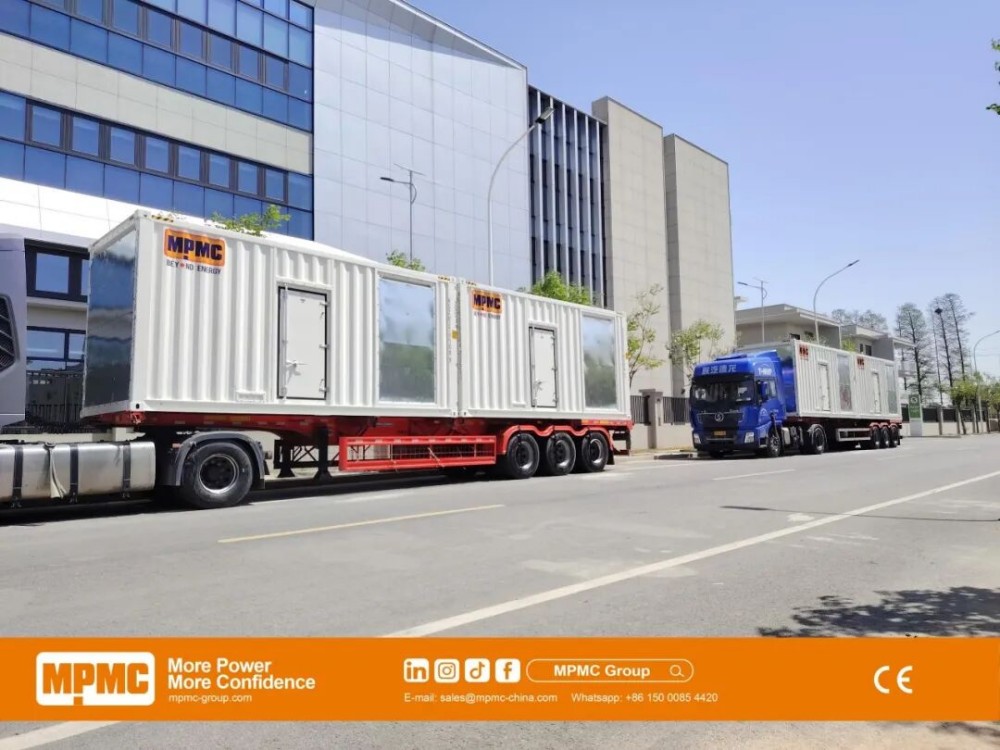
MPMC containerised 1 MW x 18 Cummins biodiesel generator sets for the 18 MW power plant in Indonesia.
Table 1. What continuous duty requires and how MPMC delivers it
Continuous-duty need
MPMC design
Benefit
Sustained full output
ISO 8528 continuous operation design
Stable round-the-clock supply
Hot-climate cooling
Copper radiators for 50°C+ ambient
Full output through hot seasons
Maintenance without outage
N+X redundancy; master-standby rotation
Units serviced while supply continues
Balanced wear
Intelligent load sharing via DSE or DEIF AGC
Even running hours across all units
Long enclosure life
C4 or C5 coating; 500-700 h salt-spray testing
Durable in coastal and tropical sites
Power quality
Frequency within ±0.25%; voltage within ±1%
Grid-quality supply for consumers
Designing the Station for Uninterrupted Supply
Large stations run multiple units in parallel with intelligent load sharing, providing N+X redundancy and master-standby rotation so that one or more sets can be serviced while the rest carry the load. Independent black-start capability lets remote stations restart without an external grid, and for long distribution runs the MCLS2000H(S)-1 generates 2,000 kVA prime at 11,000 V. Within each block, the choice of single-engine, two-engine or four-engine containerised units lets designers match unit size to the station’s load steps and maintenance plan.
Modular containers also make expansion straightforward: utilities and independent power producers can commission a first block of units and add more as demand grows, using the same controls, spares and operating procedures across the whole station.
Fuel choice is part of the design. The same containerised platform runs on diesel, natural gas, methanol or biofuel at B35 and above, and MPMC’s Indonesian stations show continuous operation on renewable fuel: the 18 MW plant on B35 lowers lifecycle CO2 by up to 85% compared with petroleum diesel, and the 21.6 MW island power station runs entirely on biodiesel.
Where solar resources are strong, stations can also integrate HBD-A battery storage in VSG and grid-forming modes, letting the battery absorb rapid load changes while generator sets run at steady, efficient output. MPMC’s Kenya microgrid applies this approach across four sites.
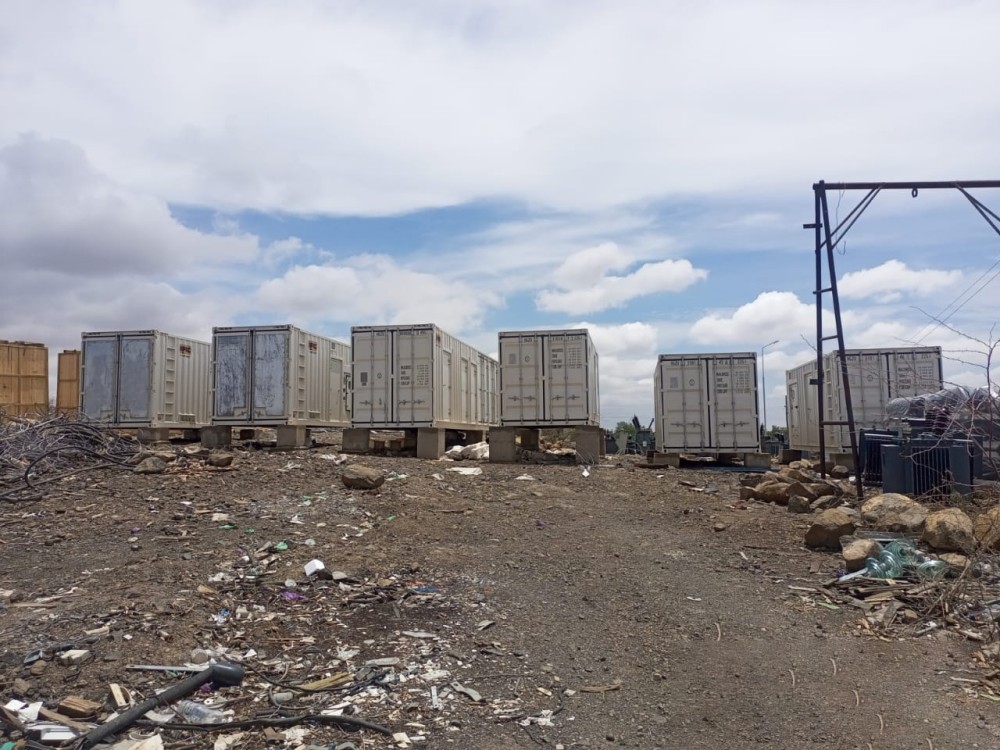
MPMC containerised Cummins generator sets at the 3.9 MW off-grid power project in Kenya.
Table 2. MPMC continuous-duty power stations
Project
Capacity
Configuration
Island power station, Indonesia
21.6 MW
Cummins KTA50-GS8 + Leroy-Somer LSA50.2 L8; biodiesel
Biodiesel power plant, Indonesia
18 MW
18 x 1 MW containerised; 1,000 kW continuous each; B35
Off-grid long-running power station, Kenya
4 MW
Cummins KTA50-G3 + Stamford S6L1D-G4
Off-grid power projects, Kenya
3.9 MW
6 x 650 kVA prime; Cummins KT38-GA + Stamford S5L1D-F4
Off-grid small power plant, Chad
1.2 MW
Cummins KTA50-GS8 + Leroy-Somer LSA50.2 L8
Every unit is load-tested from 0% to 110% in MPMC’s CNAS-accredited test centre before shipment, and projects include design consultation, customisation, logistics and commissioning. Stations that add solar can integrate HBD-A battery storage under MPMC’s EMS to reduce diesel running hours further.
The constant-temperature test room, which simulates 40°C or 50°C ambient, verifies cooling performance before shipment, so units destined for tropical and desert stations arrive with their full rated output already proven.
Planning a Continuous-Duty Station With MPMC
• Define base load, peak load and expected growth
• Set the redundancy level for maintenance cover
• Choose the fuel: diesel, gas, methanol or biodiesel
• Confirm distribution voltage and site climate
• Contact MPMC at sales@mpmc-china.com or WhatsApp +86 150 0085 4420 for a power station design
https://www.mpmc-china.com/
MPMC Powertech Corp. -
AuthorPosts

- You must be logged in to reply to this topic.